
Thursday, December 9, 2010

Nutrients Accelerate Wound Healing

Nutrition plays a major role in wound healing process, although dependent on the severity of the injury suffered. Therefore know what nutrients are needed to accelerate wound healing.

Wound healing process is complex and through several phases:

1. Inflammatory phase
In this phase, the first narrowing of blood vessels to ensure the formation of clots. Afterwards, prostaglandins and histamine in the blood will begin to dilate blood vessels to increase blood flow to the wound.

2. Phase prolifetarif
During this phase, the matrix of new blood and skin cells begin to form, as well as functioning fibrolast produce collagen also formed.This process is influenced by lactic acid, ascorbic acid and factors affecting oxygen such as iron, copper and pyridoxine.

3. Maturation phase
At this stage, wound closure occurs in the skin, the skin began to renovate even if not closed completely.

To support this third stage, there are several nutrients that play a role, as quoted from Lifemojo, Monday, 10/10/2011), namely:

Vitamin C
This vitamin acts as a cofactor in the production of collagen, and prevent the outbreak of the wounds had healed. The source can of tomatoes, peppers, potatoes, spinach, oranges, strawberries, broccoli, cabbage and cauliflower.

Vitamin A
Its role is to promote collagen synthesis and fibroblast differentiation and control of infection. The source of green leafy vegetables, fruits, yellow and orange, fortified dairy products and animal hearts.

Vitamin K
Blood clotting is the first phase of the process of wound healing, and vitamin K plays a major role in this process. Vitamin C with calcium produce thrombin (clotting main agent of the body). The source of green leafy vegetables, broccoli, grapes, avocado and kiwi.

Zinc
Zinc helps the various types of enzymes in the body to perform its function, because many enzymes involved in wound healing, especially the production of collagen. Besides helping the process of cell division that allows the body to use a particular protein. The source of seafood, lamb, red meat, cereals. asparagus, cabbage, peas, miso and sesame seeds.

Iron
In the process of collagen synthesis, iron is required for the hydroxylation of proline and lysine. If the iron deficiency (anemia) will interfere with wound healing. Source can be from turmeric, green beans, aspragaus, tofu, shiitake mushrooms, spinach, scallions, seaweed, beef and deer.

Copper (copper)
Copper helps the enzyme lysyl oxidase to produce collagen and elastin, which serves to promote wound healing faster. The source of tomatoes, potatoes, green beans, ginger, mustard greens, eggplant, asparagus, sunflower seeds, peppermint, radish, crimini mushrooms and tempeh.

Sunday, October 24, 2010

Progestin, To Help Patients Progesterone Deficiency

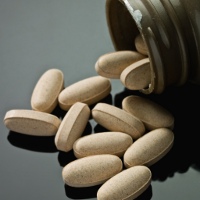
Progestin, To Help Patients Progesterone Deficiency, Progestin is a synthetic progestogen that has an effect similar to natural progesterone. Progestin is a hormone and is used by both men and women for different purposes.

Progestins are prescribed for several reasons:
1. To properly regulate the menstrual cycle and stop treating unusual menstrual periods (amenorrhea). Progestins work by causing changes in the uterus.

After a number of progestin in the blood decreases, the uterine lining begins to be apart of and vaginal bleeding occurs (menstrual period). Progestins help other hormones start and stop the menstrual cycle.

2. To help pregnancy occur during egg donor or infertility procedures in women does not produce enough progesterone. Progesterone is also given to help maintain the pregnancy if the body is less capable.

3. To prevent the thickening of the uterine lining (endometrial hyperplasia) in postmenopausal women who were treated with estrogen for ovarian hormone therapy or ovarian hormone therapy (OHT).

4. To treat the pain associated with endometriosis, a condition where endometrial tissue that lines the uterus migrate to other female organs.

5. To treat a condition called endometriosis, to help prevent endometrial hyperplasia, or to treat abnormal bleeding, and weight of the uterus (dysfunctional uterine bleeding) by starting or stopping the menstrual cycle.

6. To help treat kidney cancer, uterine, and breast. Progestins help change the cancer cell's ability to react to hormones and other proteins that cause tumor growth.In this way, progestins can stop tumor growth.

7. To test the body to produce certain hormones, like estrogen.

8. To treat loss of appetite, severe weight loss, and muscle weakness in patients with AIDS or cancer by producing specific proteins that cause increased appetite and weight.

Progestins can also be used for other conditions as determined by your doctor.Progestins can help other hormones work properly, helps prevent anemia (low iron levels in the blood), too much blood loss due to menstruation, and uterine cancer.Progestins are available only by prescription.

Progestins are also used in certain patients with medical conditions as follows:

Carcinoma of prostate
Corpus luteum insufficiency
Hot flashes, night sweats
Polycystic ovary syndrome
Mature or premature puberty

Packaging

This product is available in tablet dosage forms, suspensions, capsules, jelly, cream, and kits.

Dose

Medroxyprogesterone tablet dosage forms:

1. For controlling abnormal bleeding and dysfunctional uterine bleeding or treating unusual menstrual periods (amenorrhea):
Adults and teenagers: 5 to 10 mg per day for five to ten days as directed by your doctor.

2. To prepare the uterus menstrual period:
Adults and teenagers: 10 mg per day for five or ten days as directed by your doctor.

To prevent the thickening of the uterine lining (endometrial hyperplasia) when taking estrogen in ovarian hormone therapy in postmenopausal women:

1. Adults: When taking estrogen each day on day one to day 25; 5 to 10 mg per day for ten to fourteen or more each month as directed by your doctor. Or your doctor may want the patient to drink 2.5 or 5 mg per day without stopping. Your doctor will help determine the number of tablets is best for the patient and when to drink it.

Dosage form of an injection into the muscle:
To treat kidney or uterine cancer:
Adults and teenagers: At first, 400-1000 mg injected into a muscle as a single dose once a week. Then, your doctor may lower the dose to 400 mg or more once a month.

For injection dosage form under the skin:
To treat the pain of endometriosis:
Adults and teenagers: 104 mg injected under the skin of the thigh or abdomen every three months (12 to 14 weeks) no more than 2 years.

To megestrol suspension dosage forms:
To treat loss of appetite (anorexia), muscle weakness (cachexia), or weight loss due to AIDS:
Adults and teenagers: 800 mg per day during the first month. Your doctor may want the patient to take 400 or 800 mg daily for three months.

To megestrol tablet dosage forms:
For treating breast cancer:
Adults and teenagers: 160 mg per day as a single dose or in divided doses for two months or more.

To treat uterine cancer:
Adults and teenagers: 40-320 mg daily for two months or more.

To treat loss of appetite (anorexia), muscle weakness (cachexia), or weight caused by cancer:
Adults and teenagers: 400 to 800 mg per day.

Norethindrone tablet dosage forms:
For controlling abnormal bleeding and dysfunctional uterine bleeding or stopping of menstrual periods that is not usual (amenorrhea):
Adults and teenagers: 2.5 to 10 mg per day from day 5 to day 25 (calculated from the first day of last menstrual cycle). Your doctor may want the patient to take medicine only for five to ten days.

To treat endometriosis:
Adults and teenagers: At first, 5 mg daily for two weeks. Your doctor may increase your dose slowly to 15 mg daily for six to nine months. Let your doctor know if the patient's menstrual period has begun. physician may want the patient to drink more or may want the patient to stop taking medication for a short time.

Progesterone capsule dosage form:
To prevent the thickening of the uterine lining (endometrial hyperplasia) when taking estrogen for ovarian hormone therapy in postmenopausal women:
Adults: 200 mg per day at bedtime for 12 continuous days per 28 day cycle of estrogen treatment each month.

To treat menstrual periods stop the unusual (amenorrhea):
Adults: 400 mg per day at bedtime for ten days.

Vaginal gel dosage forms:
To stop an unusual menstrual periods (amenorrhea):
Adults and teenagers: 45 mg once daily for up to six doses. The dose may be increased to 90 mg once daily for six doses if needed.

For use with infertility procedures:
Adults and teenagers: 90 mg once or twice a day. If pregnancy occurs, treatment can be continued until 10-12 weeks.

Injectable dosage forms:
For controlling abnormal bleeding and dysfunctional uterine bleeding or stopping of menstrual periods that is not usual (amenorrhea):
Adults and teenagers: 5 to 10 mg per day injected into a muscle for six to ten days.Your doctor may want patients to receive 100 or 150 mg injected into a muscle as a single dose. Sometimes your doctor may want apsien taking estrogen. If the menstrual period had started, the doctor will advise patients to stop taking medication.

Vaginal suppository dosage forms:
To maintain the pregnancy (at ovulation and in early pregnancy):
Adults and teenagers: 25 mg to 100 mg (one suppository) inserted into the vagina once or twice a day before ovulation. Your doctor may want patients to use medication to eleven weeks.

Side Effects
Depending on how much the progestin used, progestin can have different effects.For example, high doses of progesterone are needed for women who want to continue the pregnancy while progestins in low doses can prevent a pregnancy occurs.

Other effects can lead to weight gain, increased body temperature, increase the milk-producing glands for breast-feeding, and resting the uterus to maintain pregnancy.

Side effects are more common:

1. Increasing the amount of menstrual bleeding on monthly periods, lighter vaginal bleeding between menstrual periods, heavier vaginal bleeding between monthly periods, or stopping of menstrual periods.

2. Sperti blood sugar symptoms: dry mouth, frequent urination, loss of appetite, or unusual thirst.

Side effects are rarely encountered:
1. Mental depression
2. Skin rash
3. Milk flow increases with the unexpected

Sources: MayoClinic

Sunday, October 17, 2010

Smoke Stoves Cause Deaths Two Million Per Year

Smoke from burning stoves and heaters are not perfect has caused the death of 2 million people per year. According to the U.S. National Institutes of Health (NIH), indoor air pollution from stoves has affected about 3 billion people or nearly half the world's population.

According to the NIH scientists, in addition to impact on human health, the fuel used in stoves causes of deforestation and environmental degradation. Wood, dried plants, charcoal, animal dung, coal or fuel used for the stove filled the house with thick smoke and blackening the ceiling. This increases the risk of health problems such as cancer, pneumonia, and chronic lung disease.

Women and children who have experienced the greatest risk of health damage due to being at home all the time, while men usually leave the house when the daytime. Women and girls usually collect firewood for the stove. This task is time consuming because they must walk for miles from the settlement thus increasing the risk of experiencing sexual violence and other types of violence.

If women and girls do not need to spend so much time to collect fuel, they will have more time to get an education and build the economy, says the researcher, as quoted from HealthDay, Tuesday (18/10/2011).

"Many people in developed countries do not realize that the smoke from cooking food indoors is harmful to health. International efforts to combat the epidemic has now been started. The role of NIH is to support research that will determine the most efficient means and cost-effective to maintain human health "says Dr. Francis Collins, one of the authors of the report and director of the U.S. National Institutes of Health.

To overcome this problem, the UN has launched a public-private partnership called the Global Alliance for Clean Cookstoves. The goal is to get the stove and fuel efficient for 100 million homes by 2020, and is expected for all homes later.

Monday, October 11, 2010

The Forcast For Healthcare Management Jobs

As the U.S. population ages, healthcare management jobs are likely to increase greatly, both in number and in remuneration. This also includes careers in healthcare such as administration and allied health occupations in which business skills are more important than a medical degree.

According to the U.S. Department of Labor (DOL), health care was the nation’s largest industry in 2004, providing 13.5 million jobs nationwide. About 411,000 of these health care workers were independent, self-employed professionals. 40% of the fastest growing occupations consist of careers in healthcare. Such healthcare management jobs include traditional fields such as nursing and physician’s assistant, but can also include medical secretaries and home and personal home health care aides.

Even if the U.S. finally joins the rest of the industrialized world by offering free, single-payer universal health care to all its citizens (by no means a foregone conclusion given the financial power of the insurance and pharmaceutical industries – but increasingly, a possibility with rising anger and frustration on the part of working Americans over a dysfunctional “for-profit” health care system), the job outlook should be unaffected. In fact, it is even likely to improve; contrary to corporate media propaganda, health care professionals in countries with socialized medicine enjoy a high standard of living and substantially greater job security as government employees than their U.S. counterparts.

Most healthcare management jobs are in hospitals (over 41%). Nursing homes and residential care facilities make up the second largest source of employment, with private medical and dental offices a close third.

In any event, the DOL now predict that most of the new wage and salaried jobs created over the next seven to ten years will be in healthcare management. Most of these workers have jobs requiring no more than an associate’s (two-year) degree; nonetheless, those with careers in healthcare are among the most educated in the nation.

Whatever shape health care takes in the U.S. during the coming decades, healthcare management jobs will be plentiful. If you are going to take advantage of the growing opportunities in careers in healthcare, you’ll want to make sure you are enrolled in, and receive a good quality health care management education.

Healthcare management education is offered at most major universities; there are also many schools that specialize in such courses of study. These train prospective students for careers requiring no more than an associate’s degree, such as dental hygienist, or anesthetists, which require more advanced training but do not need a medical degree; health care marketing; and even physical education for young people. Some institutions offer healthcare management education online. Before starting on your healthcare management education, you’ll want to check out several of these institutions to find out which is the best for you.