Tuesday, May 30, 2000

Nursing, Psychiatric, And Home Health Aides: Career Opportunities

Nurses' Aides and Psychiatric Aides provide supervised care for physically ill, mentally ill, injured, disabled, or infirm individuals in hospitals, care homes and institutions. Home health Jobs aides perform similar duties in the patient's home.

Aides help take the patient's temperature, pulse rate, respiration rate, and blood pressure. They provide health-related services, including administering oral medications. Psychiatric aides care for mentally impaired or emotionally disturbed individuals. They work with professional staff to help the patient in educational and recreational activities and in other ways.

Nursing, psychiatric, and Home health Jobs aides hold about 2.2 million jobs in the U.S. Approximately 1.5 million of these employees are nursing aides. Home health aides hold about 650,000 jobs and psychiatric aides about 60,000 jobs.

A high school diploma or equivalent may be necessary for a job as a nursing or psychiatric aide, but generally is not required for jobs as home health aides. Nursing care facilities may hire inexperienced workers who then complete a minimum of 75 hours of mandatory training and pass a competency evaluation within 4 months. Nursing and psychiatric aide training is offered in high schools, vocational-technical centers, nursing care facilities and some community colleges. Courses cover body mechanics, nutrition, anatomy and physiology, infection control, communication skills, and resident rights.

Federal law for medicare funded facilities requires home health aides to pass a competency test for a wide range of skills. Federal law suggests at least 75 hours of classroom and practical training, supervised by a registered nurse before taking the test. The National Association for Home Care offers a voluntary national certification for home health aides. Some states also require aides to be licensed.

Nursing, psychiatric, and home health aides must be able to:

•perform routine tasks under the supervision of nursing and medical staff.
•help patients with all mundane and personal needs,
•provide basic medical or health services, such as taking their temperature, pulse rate, respiration rate, and blood pressure and administering oral medications,
•observe patients' physical, mental, and emotional conditions ,
•work in a team under professional supervision
•socialize with patients.

Overall employment of aides is projected to grow much faster than average for all U.S. occupations, although individual occupational growth rates will vary.

How much do Nursing, Psychiatric, and Home Health Aides Earn?

Median hourly earnings of nursing aides, orderlies, and attendants were $10.09 in May 2004. Fifty percent earned between $8.59 and $12.09 an hour. The lowest earnings were less than $7.31, and the highest 10 percent earned more than $14.02 an hour.

A Day in a Nursing, Psychiatric, and Home Health Aide's Life:

On a typical day a Nursing, psychiatric and home health aide will:

•answer patients' call lights, deliver messages, serve meals, make beds, and help patients to eat, dress, and bathe,
•provide skin care to patients, take their temperature, pulse rate, respiration rate, and blood pressure, and help them to get into and out of bed and walk,
•escort patients to operating and examining rooms, keep patients' rooms neat, set up equipment, store and move supplies, and assist with some procedures,
•observe patients' physical, mental, and emotional conditions and report to the nursing or medical staff,
•administer oral medications,.
•change nonsterile dressings, give massages and alcohol rubs, or assist with braces and artificial limbs,
•socialize with patients and lead them in educational and recreational activities.

I hope this article gives you a good idea of what is involved in the career of a Nursing, Psychiatric, or Home Health Jobs Aide. Health care is the largest industry in the world. In the U.S. about 14 million people work in the health care field. More new wage and salary jobs are in health care than in any other industry. (Some figures from Bureau of Labor Statistics.)


Wednesday, October 27, 1999

Tranexamic Acid, Drugs stop bleeding

Tranexamic acid is used to help stop the bleeding condition. Tranexamic acid is an antifibrinolytic agent. This drug works by blocking the breakdown of blood clots, which prevent bleeding. These drugs are only available by prescription.

The drug is available in the following dosage forms:
1. Tablet
2. Syrup

Indication

1. To help stop the bleeding
2. Long-term management of hereditary angioedema

Contraindications

1. Severe renal failure
2. Active intravascular clotting
3. Thromboembolic disease
4. Impaired color vision
5. Subarachnoid hemorrhage

Dose

Adult
1. For short-term management of bleeding
1 to 1.5 g 2-4 times / day

2. Long-term management of hereditary angioedema
1 to 1.5 g 2-3 times / day

Side effects

Along with the required effect, the drug can cause some side effects. Although less likely to experience side effects on the use of this drug, but in the event of side effects may require medical treatment.

See a doctor immediately, if there is one of the following side effects:
1. Pale skin
2. Problems in breathing
3. Bleeding or unusual bruising
4. Fatigue or weakness

Sources: MayoClinic, Drugs.com

Tuesday, October 26, 1999

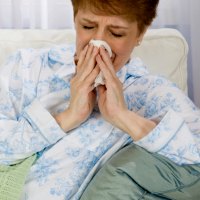
Distinguishing Colds With Flu

The layman most difficult to distinguish between the flu and colds (cold), but both have different consequences. Just so you know, the flu is more dangerous than a cold. Then how do I tell?

Learning to recognize a cold or the flu is very important, because the flu can cause serious complications such as inflammation of the lungs (pneumonia) to death.Immediately treat the flu within 48 hours after symptom onset is the best step.

How to recognize colds and flu as reported by WebMD, Thursday (10/27/2011) are:

1. Flu Comes with a quick and sudden
Flu symptoms such as sore throat, fever, headache, muscle aches, nasal congestion and cough tends to come on suddenly and is more intense than cold symptoms. Colds usually only causes a runny or stuffy nose.

Flu symptoms usually improve after two to five days, but then felt weak for a week or more. Colds come gradually and ended after about a week.

2. Usually Fever Flu Signs
Some people may experience fever when a little cold, but most do not. While the flu, fever sufferer will experience 37-38 degrees Celsius or higher. Flu fever in children tend to be higher temperature and more children may develop a fever because of the common cold.

3. Fatigue Due to Flu Can Lasts Weeks
When it got the flu, the sufferer will begin to feel very tired and sore all over the body.Fatigue and weakness can last up to 3 weeks or even longer in the elderly and people with chronic illnesses or impaired immune system.

While on a cold, the symptoms only last a few days.

4. Colds and Flu Can Cause Headaches
Headache is not a reliable indicator of flu, a cold can also cause headaches. But the headaches caused by colds tend to be milder than those caused by the flu.

5. Nor Cough Colds Flu Signs
Because colds and flu is a respiratory disease that affects the airways, both of which can cause coughing.

6. Pneumonia or pneumonia is a lung infection that can be complications from the flu.
Call your doctor if you experience persistent cough, fever higher than 38 degrees Celsius, fever, difficulty breathing, shortness of breath, or chest pain due to cough, or cough with phlegm greenish yellow or bloody.

7. Can ear pain Caused Due to Colds or Flu
Colds and flu can cause ear pain due to irritate eustachius channel that connects the throat to the middle ear. Irritation can cause pain or burning sensation. Ear pain due to colds and flu usually goes away by itself.

If the pain lasts longer than illness or suddenly felt very ill, see your doctor. May have occurred ear infection and need treatment.

8. Colds Starts With Sore Throat
Most colds start with a sore throat for one to two days. Runny and stuffy nose are also common. Sore throats can also be a symptom of the flu. But the flu, sore throat accompanied by fatigue and other symptoms that often occur simultaneously.

9. Stuffy Nose Colds Caused Averages
Unless a very sick with fever and drain energy, congestion is generally caused by colds, although many people with flu have also reported runny nose and sneezing.

10. Both colds and flu can cause sinus infections.
Symptoms are characterized by deep pain and constant in the cheekbones, forehead, or nose. The pain usually gets worse when moving the head suddenly.

11. Test Can Identify Avian Flu Quickly
The quickest and most effective way to find out whether the flu or a cold is to undergo tests at the doctor's office. By examining the nose or throat, the doctor can tell if it's cold atu flu in less than 30 minutes.

If it turns out positive for the flu and its symptoms have been started since the last 48 hours, your doctor may recommend antiviral treatment to accelerate healing.

12. Immediate Start Anti-Flu Treatment
Flu can be dangerous, but antiviral drugs can make patients feel better and shorten the illness of one or two days if started immediately.

13. Drugs Can Reduce Symptoms of Colds
The drugs are usually purchased at pharmacies such as decongestants, cough medicines, and antihistamines can alleviate the symptoms of nasal congestion, cough, and runny nose. Acetaminophen, ibuprofen, or naproxen to treat pain or headache.

14. Read the active ingredients and warnings on all product labels.
Most cough and cold medicines contain the same material, so that it can lead to overdose by accident.

Colds and Flu Prevention: Hand Washing
Washing your hands properly can help prevent the spread of flu. Rub your hands with soap and warm water for 20 seconds. Do not forget to brush well between fingers and around nails. Rinse and dry thoroughly. Alcohol-based hand cleaners also proved successful.

Frequently wash your hands during cold and flu season, especially after coughing, sneezing, or blowing the nose. If you can not find a tissue, sneeze or batuklah to the elbow, not into the hand.

Flu Prevention: Vaccines
The flu vaccine is made from flu viruses in a version that is not harmful to help the body recognize and fight the flu actually. The vaccine is very important for children aged 6 months and over, pregnant women, adults aged 50 years and over, and patients with chronic disease or immune system diseases. Healthy children aged 2 years and older and healthy adults aged under 50 who are not pregnant can choose the nasal spray vaccine.

Is the Swine Flu (H1N1) Still Threatening?
Swine flu had rocked the world in 2009, but the outbreak was officially ended in 2010. The current flu vaccine is able to protect from swine flu and seasonal flu.

Swine flu and seasonal flu symptoms usually include cough, sore throat, fever (although not all people with flu have a fever) and body aches. Many patients with swine flu also experience stomach upsets such as vomiting and diarrhea.

Monday, October 25, 1999

How to Maintain Weight Loss After the Diet

How to Maintain Weight Loss After the Diet, After diet weight loss often arises again. Researchers found that the return of most of the weight loss occurred shortly after the first weight loss. How to maintain weight after dieting?

According to the analysis of data from the National Weight Control Registry (NWCR) in the United States, 10,000 study participants who had lost a minimum weight of 14 kg was able to maintain their weight for a year or more.

According to the NWCR, there were about 3,000 men and women dieters who successfully maintain weight loss for 10 years. Successful dieters are mostly female and have higher education. Average body weight beginning when weighed is 102 kg and decreased by 31 kg.

Based on responses to questionnaires that participants completed the study, researchers found that the return of most of the weight loss occurred shortly after the first weight loss. Over time, the weight gain slowed down.

After five years, the participants returning weight about 7.5 kg. At the end of the 10-year follow-up, the average participant has increased a few pounds of weight and then keeping it at number 23 kg.

So how do they maintain their weight after dieting? As dirilus USAToday.com, Wednesday (26/20/2011), NWCR write a list of the following techniques to maintain weight after dieting:

1. Track your food intake
2. Calculate the calories or fat grams or use commercial weight loss programs to track food intake
3. Follow a diet low in calories and low in fat. Ate about 1,800 calories per day with less than 30% of calories derived from fat
4. Eating breakfast regularly
5. Limit the amount of food. Eating out an average of three times a week and eat fast food less than once a week.
6. Eating the same foods on a regular basis and not too much on holidays and special occasions
7. Walking around an hour a day or burn calories the same with other activities
8. Viewing TV less than 10 hours a week
9. Weigh weight at least once a week

This behavior will help most people control their weight. This technique will work for people who want to fill out a survey every year, keep a diet, doing exercise long term, and resist the temptation to excess spending, even on holidays.